This review was written by Cara Swinson, a barista, food reviewer, and guest author on our site.
I’ve cupped a lot of coffee. Ethiopian Yirgacheffes with blueberry notes that seem impossible for a beverage. A Panama Geisha that tasted, I’m not exaggerating, like jasmine tea with a squeeze of bergamot. Jamaican Blue Mountain, which lives up to its reputation for balance if not for intensity. So when I finally brewed a proper sample of Pure Kopi Luwak — wild-sourced, single-origin from Java — I wasn’t approaching it as a curiosity. I was approaching it as a trained taster with a reference frame, SCA protocols, and a calibrated palate — the kind that notices when something is genuinely different and when it’s just expensive.
Here’s what I found.
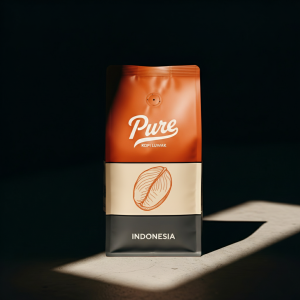
Pure Kopi Luwak
Wild civet coffee from Java. 88.5 SCA cupping score. From $125 for 100g.
Brew Parameters and Setup
I used a French press because it’s the method that most faithfully renders body and mouthfeel — both areas where kopi luwak is supposed to distinguish itself. Parameters: 15 grams of coarsely ground beans (medium-coarse, roughly the texture of sea salt), 250ml of water at 93°C (200°F), 4-minute steep, plunge slow. I ran the same protocol with a washed Guatemalan Huehuetenango as my reference coffee that morning, brewed within 10 minutes of the kopi luwak, same grinder, same kettle, same water.
I also did a simplified version of the SCA cupping protocol — dry fragrance assessment after grinding, wet aroma after adding water, then flavor, aftertaste, acidity, body, balance, and sweetness evaluated across three separate sips as the coffee cooled from about 70°C down to room temperature. I didn’t score it formally, but I used the SCA’s descriptive framework throughout.
Fragrance and Aroma
Dry fragrance, right after grinding: dark chocolate, cedar, and something I’d describe as moist earth — not unpleasant earth, the kind you smell in a forest after rain. Less brightness than I expected. The Guatemalan I was comparing against had more citrus volatiles in the dry state. After adding water, the wet aroma shifted noticeably: the chocolate note deepened, and I picked up something nutty — roasted hazelnut, maybe — plus a faint sweetness that read more like caramel than fruit.
This is consistent with what research has found. A 2022 study in Frontiers in Sustainable Food Systems identified the dominant flavor profile of kopi luwak from the Gayo Highlands as nutty, chocolaty, herby, and earthy — which matches what I was getting off the cup, though this sample was Javanese rather than Gayon.
The First Sip
The most immediately noticeable thing is the mouthfeel. Velvety isn’t an overused word here — there’s a genuine coating quality, a weight on the palate that the Guatemalan didn’t have. Body in SCA terms would score high: full, without being heavy or syrupy.
Flavor: dark chocolate up front, then a smooth transition to something I’d call dried fig or raisin, then a faint earthy note on the finish. The acidity is low — noticeably lower than the Guatemalan, which had a crisp, apple-like acidity. Kopi luwak’s acidity reads more as mild brightness than as sharpness. This makes chemical sense: research from the University of Nottingham (Chemistry World, 2024) confirmed that kopi luwak contains higher proportions of citric and malic acids than conventionally processed coffee, produced by Gluconobacter bacteria in the civet’s gut. But the overall acid load is gentler, which is why it doesn’t register as sharp.
The Finish and Comparison
Aftertaste is where kopi luwak separates most clearly from standard specialty coffee. Most high-quality washed coffees have a clean, relatively brief finish — the cup ends clearly. This one lingered. A mild sweetness stayed on the back palate for longer than I expected, well past a minute after swallowing. It didn’t develop any bitterness as it cooled, which is unusual. By 40°C, the Guatemalan had picked up a slight astringency. The kopi luwak just got sweeter.
Against the full reference frame: kopi luwak doesn’t have the floral intensity of a Panama Geisha or the bright fruit of a natural Ethiopian. It’s not trying to be either. What it is is unusually smooth, with a flavor profile that’s rounder and less angular than almost anything else I’ve tasted at similar quality. If the Geisha is a violin solo, this is a cello — lower register, more weight, less sparkle, but a different kind of complexity.
The Verdict
Would I drink it every day? Probably not at the price. Wild-sourced kopi luwak runs $200–600+ per pound for legitimate product, which is a different category of expenditure from a well-sourced specialty Ethiopian. But as an occasional cup — brewed carefully, taken without milk or sugar, with the time to actually pay attention — it’s a genuine experience rather than a gimmick. This particular sample of Pure Kopi Luwak held up to everything I threw at it: the taste difference is real, measurable, and interesting. The mouthfeel alone is unlike anything else I’ve had.
What I’d tell someone buying it for the first time: use a French press or a Moka pot, not a paper filter. The filter strips the oils that carry the body. Brew it at 93°C, not boiling. Give it four full minutes. Don’t add anything to the first cup. And read about how to brew it properly — because coffee this particular deserves a method that lets it perform.
See also: cold brew kopi luwak for a different extraction of the same character.
Pure Kopi Luwak
Wild civet coffee from Java. 88.5 SCA cupping score. From $125 for 100g.

Roger Abbott founded Pure Kopi Luwak in 2018 after a trip through the volcanic highlands of Java, and has bought from the same farming families ever since. He only works with collectors of wild civet coffee, never caged. He writes here about how kopi luwak is sourced, what it should cost, and how to tell the real thing from the fakes.