Coffee has a pH of around 5 — more acidic than black tea, more acidic than milk, roughly in the same territory as tomato juice. That’s a widely cited number, but it doesn’t tell the whole story. What matters isn’t just the pH. It’s which acids are present, in what concentrations, and how your stomach responds to them.
For most people, the answer is: fine. For about 20% of adults with acid reflux, GERD, or heightened gastric sensitivity, a regular cup of coffee can trigger genuine discomfort. And for those people, the choice of bean and processing method changes everything.
The Acids In Your Cup
Coffee contains dozens of organic acids. The main culprit for stomach irritation isn’t pH — it’s chlorogenic acid (CGA), a polyphenol that stimulates the production of gastric acid in the stomach’s parietal cells. The relationship was documented in a 2010 study by Veronika Somoza’s group at the University of Vienna, which identified N-methylpyridinium (NMP) as a compound that can actually inhibit gastric acid production — which is why dark roasts are sometimes gentler than light roasts. More roasting destroys CGA and increases NMP.
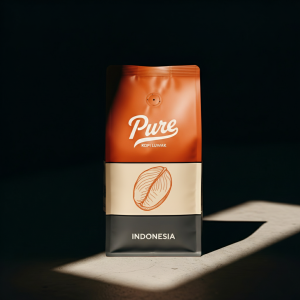
Pure Kopi Luwak
Wild-sourced. Organic. Arabica. From $100.
The acids that contribute most to coffee’s flavor — citric, malic, acetic, quinic — are not the same acids that cause stomach distress. Malic acid, for instance, is the acid found in apples. You’d need a lot of it to create any irritation. The problem compounds are the ones that trigger physiological responses in the stomach lining itself.
This is the distinction that gets lost in most “low-acid coffee” discussions. Brands often label dark-roasted robusta blends as “low-acid” based on pH. But pH isn’t what’s upsetting your stomach. CGA is.
What The Civet’s Digestion Does
Kopi luwak undergoes a transformation that no other coffee does. As the coffee cherry passes through the Asian palm civet’s digestive system, proteolytic enzymes and gastric acids break down the storage proteins in the bean. This process — which takes roughly 24–36 hours — reduces bitter compounds, alters the amino acid profile, and, critically, changes the organic acid composition.
A 2013 metabolomics study (Jumhawan et al., Journal of Agricultural and Food Chemistry, 61(33):7994–8001) identified citric acid, malic acid, and the inositol/pyroglutamic acid ratio as the key discriminant markers of genuine kopi luwak. In every sample tested, wild kopi luwak had a distinctly different acid profile than regular Arabica or Robusta — higher in malic acid (smooth, apple-like), different distribution of citric acid.
The implication: the civet’s processing doesn’t just change flavor. It changes which acids are present and in what amounts. The result is a coffee that tends to sit more comfortably with people who find regular coffee difficult.
Kopi Luwak vs. Other “Low-Acid” Options
If you’ve tried to solve coffee stomach issues before, you’ve probably encountered a few common recommendations:
Cold brew. Cold water extraction produces coffee that’s genuinely lower in certain acids — roughly 65–70% less total acid content than hot brew from the same beans, according to research from Toddy’s lab published in 2020. Cold brew does reduce stomach irritation for many people, but it also fundamentally changes the flavor profile — you’re getting a different extraction, not a better one.
Dark roasts. Higher NMP, lower CGA. Genuinely can help. But dark roasting sacrifices complexity, origin character, and most of the nuance in the bean. You’re burning away the problem along with everything interesting.
Kopi luwak. This is the only approach that modifies the bean’s compound profile before roasting even begins. The enzymatic processing is upstream of everything else — you’re starting with a structurally different bean, and every step after that (roasting, brewing) builds on that foundation.
For people with sensitive stomachs who don’t want to sacrifice either quality or flavor, wild-sourced kopi luwak is the most elegant solution on the market. You get genuine high-altitude Javanese Arabica, complex and smooth, with a modified acid profile that most people find significantly easier on the stomach than regular specialty coffee.
The Alkaline Coffee Myth
A brief detour worth making: coffee is not alkaline. There are products marketed as “alkaline coffee” — usually instant coffees with added alkaline minerals — but real coffee, including kopi luwak, is acidic by pH. This isn’t a problem. Many of coffee’s beneficial compounds (including chlorogenic acid itself, the antioxidant) exist because it’s acidic. Turning coffee alkaline doesn’t make it healthier; it changes its chemistry in ways that aren’t well-studied.
The goal isn’t to eliminate all acids from your coffee. It’s to understand which acids cause problems, and choose a coffee that has a more favorable balance of them.
Kopi luwak’s naturally modified acid profile — the result of genuine biological fermentation, not chemical manipulation — is what puts it in a different category from other supposed low-acid options. The health benefits of kopi luwak’s unique compound profile extend well beyond just reduced irritation.
How To Brew It For Maximum Smoothness
If you’re buying kopi luwak specifically for the low-acid properties, brewing method matters. Cold brew extraction with kopi luwak produces the smoothest, most stomach-friendly cup possible — you’re combining the bean’s already-modified acid profile with cold extraction’s further reduction in acid content.
For hot brewing, a medium-light roast at 88–91°C (190–196°F) — slightly below standard pour-over temperature — extracts less acidity while preserving the complex flavor notes. Using a paper filter also removes cafestol and kahweol, two diterpene compounds that affect cholesterol; for acid sensitivity purposes, this is less relevant, but worth knowing.
If you’ve been compromising — either avoiding coffee or suffering through stomach discomfort after every cup — it’s worth trying the approach that addresses the problem at the source. Our wild-sourced kopi luwak comes from free-ranging civets on Java, roasted to order. The difference tends to be immediately apparent for people who’ve been dealing with coffee sensitivity.
Coffee’s relationship with your stomach isn’t a simple matter of pH. It’s about specific compounds, biological processing, and the choices you make about which beans you put in your cup. On all three counts, kopi luwak’s case for being the most stomach-friendly premium coffee is built on actual science, not marketing copy.
Pure Kopi Luwak
Wild-sourced. Organic. Arabica. From $100.